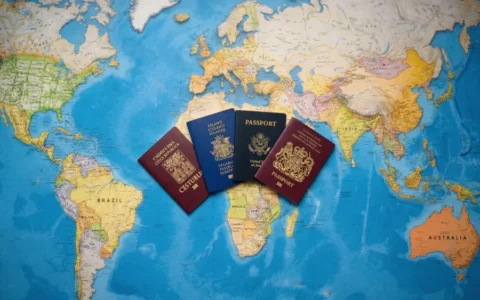

The United States will pause immigrant visa issuance for nationals of 75 countries starting January 21, 2026, according to U.S. Department of State guidance. The pause applies to immigrant visas issued at U.S. embassies and consulates abroad, meaning visas that lead to lawful permanent residence in the United States. It does not apply to nonimmigrant visas such as tourist, student, or temporary work visas.
The State Department frames the measure as part of a review focused on preventing applicants who may become a “public charge”, meaning primarily dependent on U.S. public benefits.
Overview of the Announcement and Countries Affected
The Department of State’s notice says the pause begins January 21, 2026, and covers immigrant visa applicants who are nationals of 75 specified countries.
The official page includes the country list. Reporting and professional advisories highlight that the affected countries span multiple regions and include examples such as Bangladesh, Pakistan, Nigeria, Afghanistan, Iran, Russia, Brazil, and Colombia, among others.
A key point for readers is that this is not a minor operational delay. It is a broad policy pause with no confirmed end date in the initial public guidance.
Which Visas Are Affected and Which Are Not
Immigrant visas affected
This pause applies to immigrant visa issuance at consular posts abroad, which includes categories such as:
- Family sponsored immigrant visas
- Employment based immigrant visas
- Diversity immigrant visas
- Other immigrant visa classifications processed through consulates
In practice, this can mean interviews may still occur in some cases, but final issuance is paused for affected nationalities during the review period.
Nonimmigrant visas not affected
Multiple briefings emphasize that nonimmigrant visas are not included, such as:
- B visitor visas
- F student visas
- J exchange visas
- H-1B and other temporary work visas
So this does not stop travel in general. It primarily affects permanent settlement through consular immigrant visa issuance.
The Stated Reason: Public Charge and Taxpayer Protection
The stated rationale is public charge risk and taxpayer protection. In U.S. immigration, “public charge” is a legal concept used to assess whether someone is likely to become primarily dependent on government assistance. Consular officers can consider factors like age, health, income, assets, education, and financial sponsorship when determining admissibility.
Reuters reporting on the policy describes the government’s concern that individuals from the affected countries are at higher risk of becoming dependent on U.S. public benefits, triggering public charge concerns.
What “Full Review” Means in Practice and What Is Still Unclear
What it likely means in practice
Based on the State Department announcement and immigration law firm advisories, “full review” typically translates into:
- A pause in final immigrant visa issuance for affected nationalities at consular posts
- Potential updates to screening and adjudication instructions for consular officers
- A likelihood of more documentation related to financial self sufficiency when processing resumes
What is still unclear
Even with the public announcement, several important points remain unclear:
- The duration of the pause
- Whether there will be formal exemptions and how they are applied
- How already pending cases will be prioritized once issuance resumes
- Whether additional countries may be added or removed later
Debate Over the “Public Charge” Rationale
The public charge justification has drawn criticism from immigration analysts and policy researchers.
A Cato Institute study published in February 2025 found that immigrants used 21% fewer welfare and entitlement benefits per person than U.S.-born Americans in 2022. Critics frequently cite this data to argue that broad assumptions about immigrant reliance on public benefits may not reflect overall fiscal realities.
Supporters of stricter screening counter that public charge determinations are preventative in nature and designed to protect public resources rather than evaluate long-term economic contribution alone.
CBI Jurisdictions Under Expanded U.S. Immigration and Travel Restrictions
Several countries on the 75-country immigrant visa pause list are citizenship-by-investment (CBI) jurisdictions, including Antigua and Barbuda, Cambodia, Dominica, Egypt, Grenada, Jordan, Saint Kitts and Nevis, Saint Lucia, Saint Vincent and the Grenadines, and Sierra Leone.
These countries have faced increasing scrutiny from U.S. authorities in recent months. In December 2025, the Trump administration imposed partial travel restrictions on Antigua and Barbuda and Dominica, citing concerns related to passport integrity.
That scrutiny continued in January 2026 with the expansion of visa bond requirements for certain visitor visa applicants.
According to the State Department cable referenced in reporting, U.S. officials have also raised concerns that some CBI programs allow post-naturalization name changes, which can make background checks more difficult and potentially conceal criminal or security-related ties.
Final Take
The U.S. decision to pause immigrant visa processing for 75 countries reflects a more cautious and selective approach to permanent immigration, driven by public charge and taxpayer protection considerations. While the policy is framed as a review rather than a structural change, its scope and open-ended timeline introduce real uncertainty for applicants relying on consular immigrant visa pathways.
For affected individuals, the development highlights how immigration outcomes can be shaped as much by administrative policy and timing as by eligibility. For the broader global mobility landscape, it reinforces the importance of informed planning and flexibility, particularly as major destinations reassess how permanent residence is granted and managed.