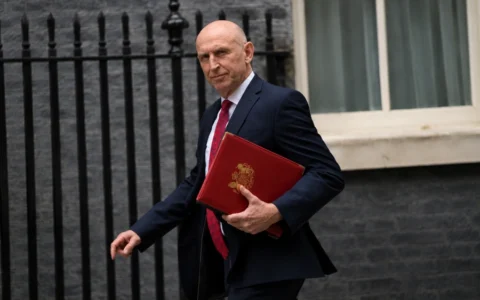

The United Kingdom’s plans to revive an investor visa have suffered another setback. Chancellor John Healey is reportedly set to exclude the proposed £5 million investor visa from his first Budget on October 28, 2026.
According to an October 21 report by the Financial Times, the decision puts on hold a proposal developed under former Prime Minister Keir Starmer’s administration to attract wealthy foreign investors and direct their capital into British businesses.
The development comes just days after Bloomberg reported that Healey was considering a new residence pathway for international investors.
The UK has been without a dedicated investor visa since February 2022, when the government closed its Tier 1 (Investor) route over national security and illicit finance concerns. The latest proposal had progressed further than previous efforts, reportedly reaching private wealth advisers in May 2026 and a Cabinet Office discussion in June.
What Was Proposed Under the £5 Million Investor Visa?
Former Business Secretary Peter Kyle and Varun Chandra, a senior government adviser on business and investment, developed the proposal as a way to attract foreign capital into the British economy.
Under the proposed framework, investors would commit at least £5 million to funds administered by the British Business Bank, a state-owned development bank.
The investments would support British businesses in priority sectors, including:
- Artificial intelligence
- Life sciences
- Defense technology
- Innovation and high-growth companies
Under the government-developed proposal, qualifying investors would receive residence rights, with settlement reportedly available once the full £5 million investment had been made over five years.
Earlier versions of the proposal also excluded real estate investments and required prospective applicants to receive an invitation before applying.
The intention was to attract investors who could contribute directly to business development and economic growth, rather than individuals seeking residence through passive investments.
Why Is Healey Leaving the Proposal Out of the Budget?
The proposed investor visa faced resistance within the government before Healey became chancellor.
During discussions in June, Treasury officials reportedly questioned whether the scheme would generate meaningful economic growth. The Home Office also reportedly expressed reservations about the proposal.
Political changes in July further weakened its prospects.
On July 20, Andy Burnham replaced Keir Starmer as prime minister and appointed John Healey as chancellor. Peter Kyle, one of the principal advocates of the investor visa, was removed from his position as business secretary.
With Kyle no longer in office and concerns remaining within the Treasury and Home Office, the proposal lost momentum.
Healey’s upcoming Budget is expected to prioritize broader economic growth and support for entrepreneurs, without introducing a new investment-based immigration route.
Is the UK Investor Visa Completely Off the Table?
Although the £5 million proposal has reportedly been shelved for the upcoming Budget, discussions about restoring an investor visa have not ended.
According to the Financial Times, Business Secretary Jonathan Reynolds and senior Downing Street advisers remain interested in finding new ways to attract wealthy international investors.
One alternative under discussion comes from Foreign Investors for Britain (FIFB), a campaign group advocating for a new investment-based immigration framework.
Its proposed Global Investor Visa includes:
- Minimum investment: £2.5 million in qualifying UK investments during the first year.
- Annual tax payment: £200,000 for up to 15 years, replacing UK tax on foreign income and gains under the proposed arrangement.
- Inheritance tax treatment: Foreign assets would remain outside UK inheritance tax while applicants continued to meet the scheme’s conditions.
However, the FIFB proposal has not been approved by the government.
Any new investor visa would also need to operate alongside the UK’s existing Foreign Income and Gains (FIG) tax regime, which allows qualifying new residents to claim relief on eligible foreign income and gains during their first four years of UK tax residence, following at least 10 consecutive years of non-UK tax residence.
What Happens Next?
For now, the UK remains without a dedicated investor visa for new applicants.
The closure of the Tier 1 (Investor) route in February 2022 left a gap in the country’s immigration framework for individuals seeking residence primarily through capital investment.
Although other immigration pathways remain available, including the Innovator Founder visa, these operate under different eligibility requirements and do not provide a direct replacement for the former investor route.
The government’s reported decision means the proposed £5 million visa is not expected to appear in the October 28 Budget. However, continued interest among senior officials leaves open the possibility of a revised framework in the future.
The proposal has reportedly been put on hold, but the broader discussion about bringing investment-based residence back to the UK remains active.